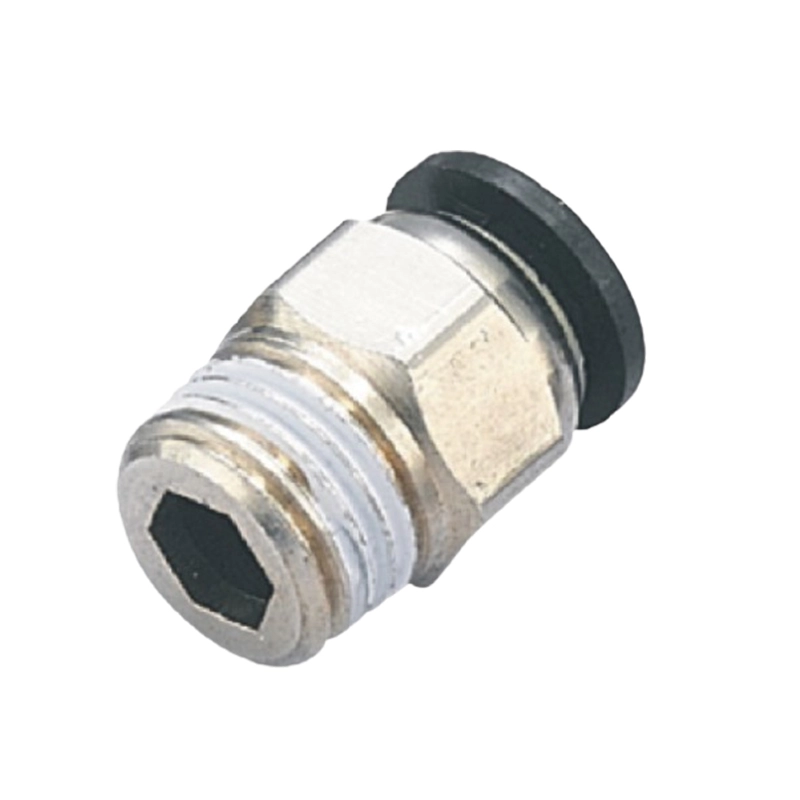
A fitting connects two interfaces: tubing or hose on one side and a mating port or another line on the other. Matching one nominal size leaves important details unresolved. Specify the tube, connection method and actual port designation together.
Use the correct tube dimensions
Push-in fittings are selected by tube outside diameter. Also confirm material, dimensional tolerance and surface condition. If the same outside diameter is available with different wall thicknesses, record inside diameter as well.
Nut-locking fittings need both dimensions: the nut must suit tube outside diameter while the internal support suits its inside diameter. A hose-barb connection is a different interface and must match the intended hose and retaining arrangement.
State the connection method
Push-in, nut-locking and hose-barb products use different assembly methods. Check the exact fitting and tubing together. Include access for assembly, release or retaining hardware.
An orientation feature on a swivel elbow does not prove suitability for continuous rotation. Describe repeated movement or rotation separately so the appropriate connection can be checked.
Identify the mating thread
Give the full thread designation and male or female arrangement. A family name, approximate diameter or similar appearance is insufficient. The selected rapid-fitting models have different thread configurations; do not assign one standard to the whole range.
For a replacement, include a clear view, measurements and any drawing reference. Check the selected thread and sealing arrangement against the mating component.
Check complete working conditions
Record medium, temperature and working pressure. A tube’s higher rating does not raise the fitting’s rating. The assembly must remain within the lowest allowable working limit of its connected components under the actual conditions.
Do not use burst pressure as continuous operating pressure. Tubing ratings depend on the stated material, dimensions and temperature. Do not transfer a rating from one material, wall thickness or test condition to another without applicable data.
What to record
- Tube/hose material, outside and inside diameters.
- Push-in, nut-locking or hose-barb method.
- Full port/thread and mating arrangement.
- Medium, temperature, pressure, routing and movement.
- Complete fitting code, access and quantity.
Compare fittings with the appropriate tubing range. Avoid replacing a fitting from shape or tube outside diameter alone.